Trading involves risk. Not financial advice.
- Published
- Maker
- FTMO
- Price
- Challenge from €155 (10k account)
- Tested by
- The Spreadcraft Test Desk
- Reading time
- 3 min
- Primary source
- FTMO
FTMO review: is the original prop firm still worth its higher challenge fee?
FTMO charges more than newer rivals for a simulated funded account. We read its rules, fee refund and payout terms to see whether the name still justifies the premium.
FTMO is the most established name in forex prop trading, with clear rules, a fee refunded on the first profit split and fast payouts by industry standards. It is also dearer than most copycats, and every dollar of the account is simulated. Choose it if you already trade with discipline and value reputation, and skip it if you want the cheapest attempt.
- Best for
- Disciplined forex traders who value a proven prop firm over the lowest fee
- Price
- Challenge from €155 (10k account)
- Maker
- FTMO
What works
- Long track record since 2015 and one of the best-known prop brands
- Clear published rules for 2-Step, 1-Step and swing style accounts
- Challenge fee is refunded with the first profit split, per third-party reports
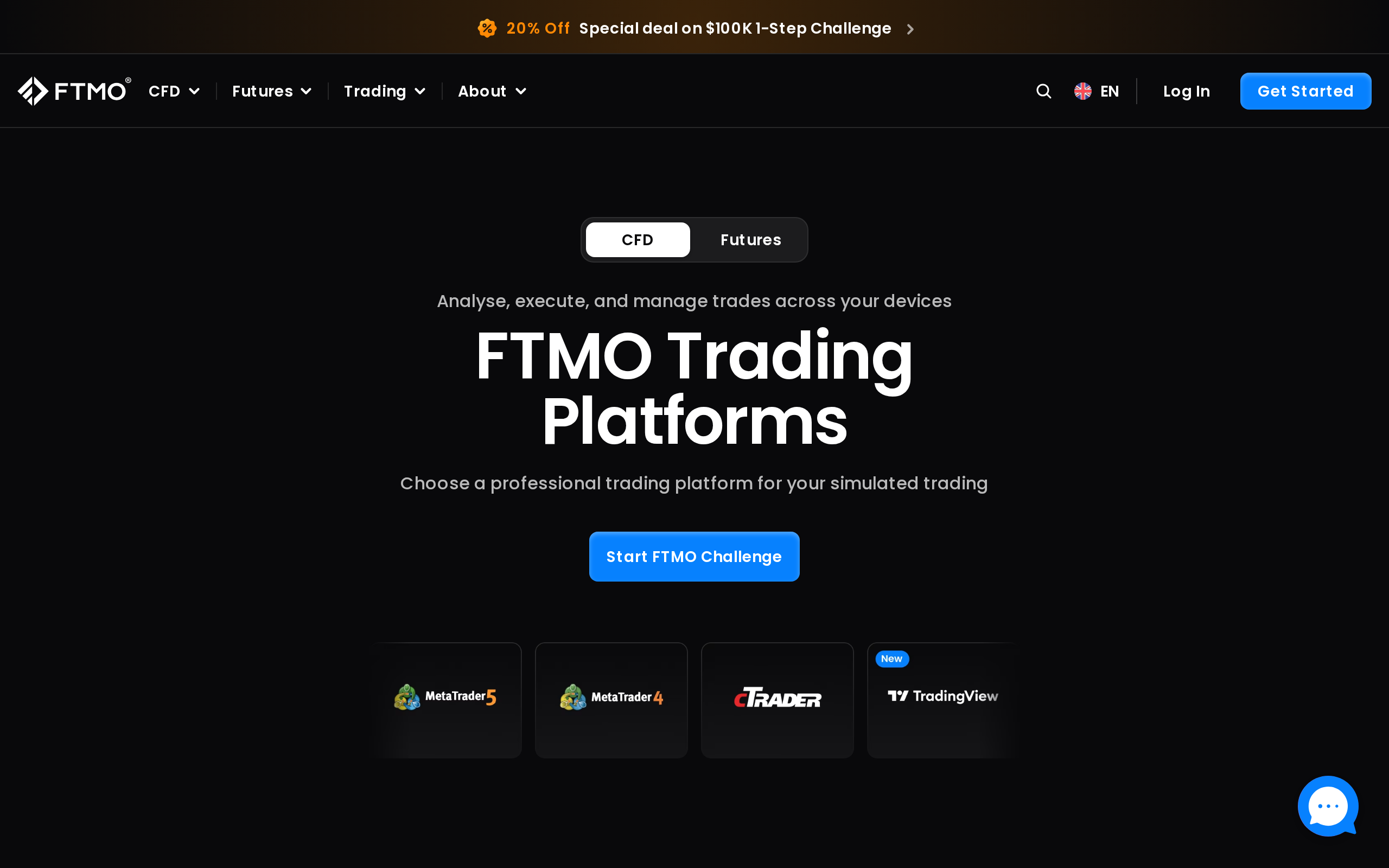
- Choice of MT4, MT5, cTrader and TradingView for the simulated account
What does not
- Challenge fees run above rivals such as The5ers or FundedNext
- Accounts are simulated, so you trade demo capital, not live funds
- Daily loss of 5% or 3% and a 10% max loss end attempts quickly
Specs
- Challenge fee, 10k account
- From €155 (third-party listings of $183 on some plans)
- 2-Step targets
- 10% in the Challenge, 5% in Verification
- 2-Step loss limits
- 5% daily, 10% static maximum loss
- 1-Step limits
- 3% daily, 10% trailing maximum loss, best day rule
- Minimum trading days
- 4 in the 2-Step
- Profit split
- 80% at the start (third-party review)
- Account sizes
- Up to $200,000 simulated capital
- Platforms
- MetaTrader 5, MetaTrader 4, cTrader, TradingView
- Fee refund
- With the first profit split (third-party report)
A prop firm sells one thing: a chance to trade someone else's money after you prove you can. What you buy is a test. So the fair question about FTMO is whether its test is better than a cheaper one, and whether that difference is worth paying for.
What you are actually paying for
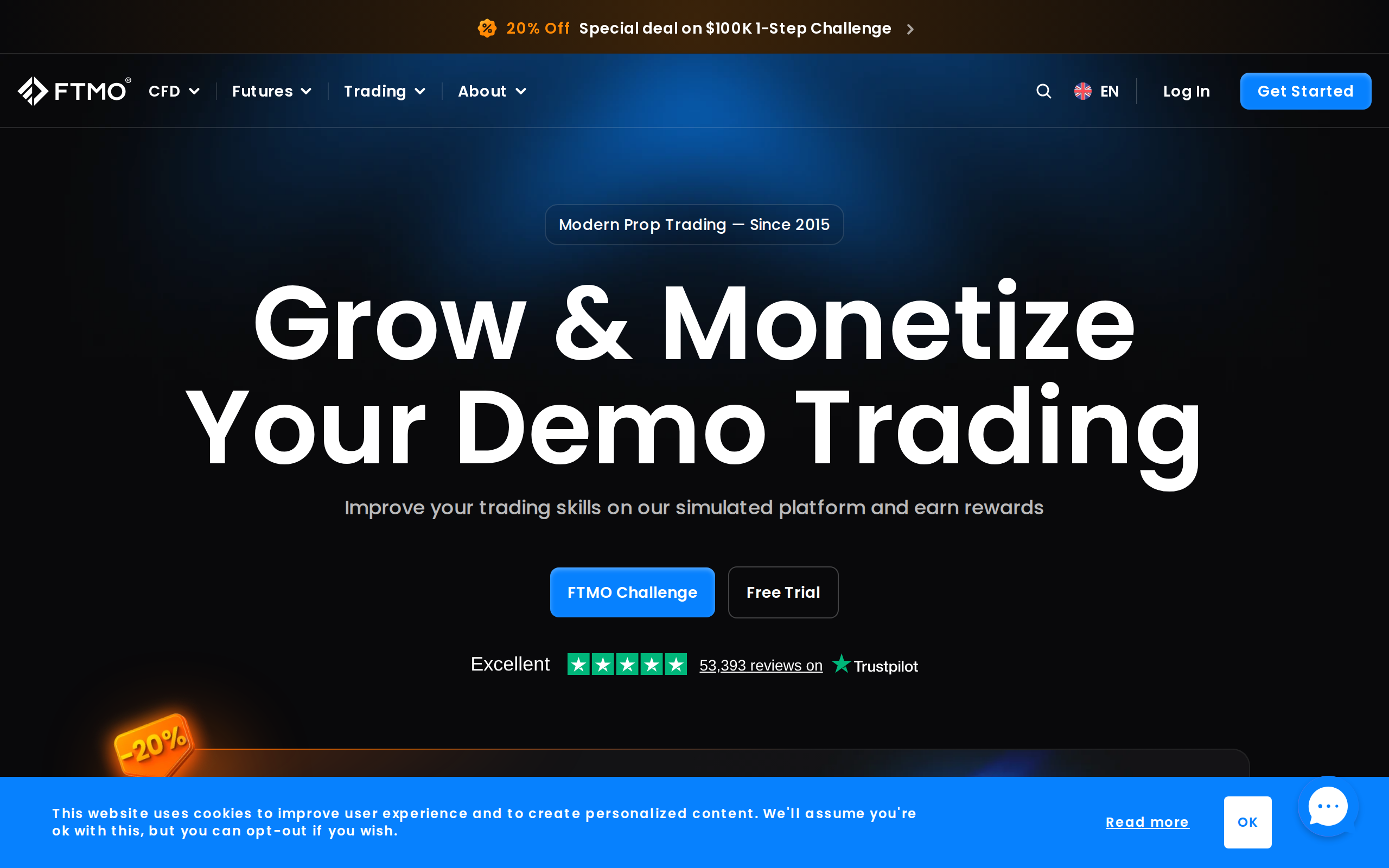
FTMO's homepage shows a $100,000 challenge at a euro price in the high hundreds, with a special deal that has run at €439 and €399 on the page we captured. The entry account is far lower, from €155 for $10,000. Third-party listings quote about $183 for a $10,000 Standard plan and $1,274 for $200,000.
One fact matters more than any price. FTMO's own wording is "simulated capital" and "demo trading." You are not handed live funds. Your results are tracked on a simulated platform, and payouts come from what the firm calls rewards. That is standard across prop firms, yet many buyers do not register it. You pay a real fee and trade a demo balance.
The rules that decide most attempts
The rule page is where FTMO earns its reputation, because it is precise.
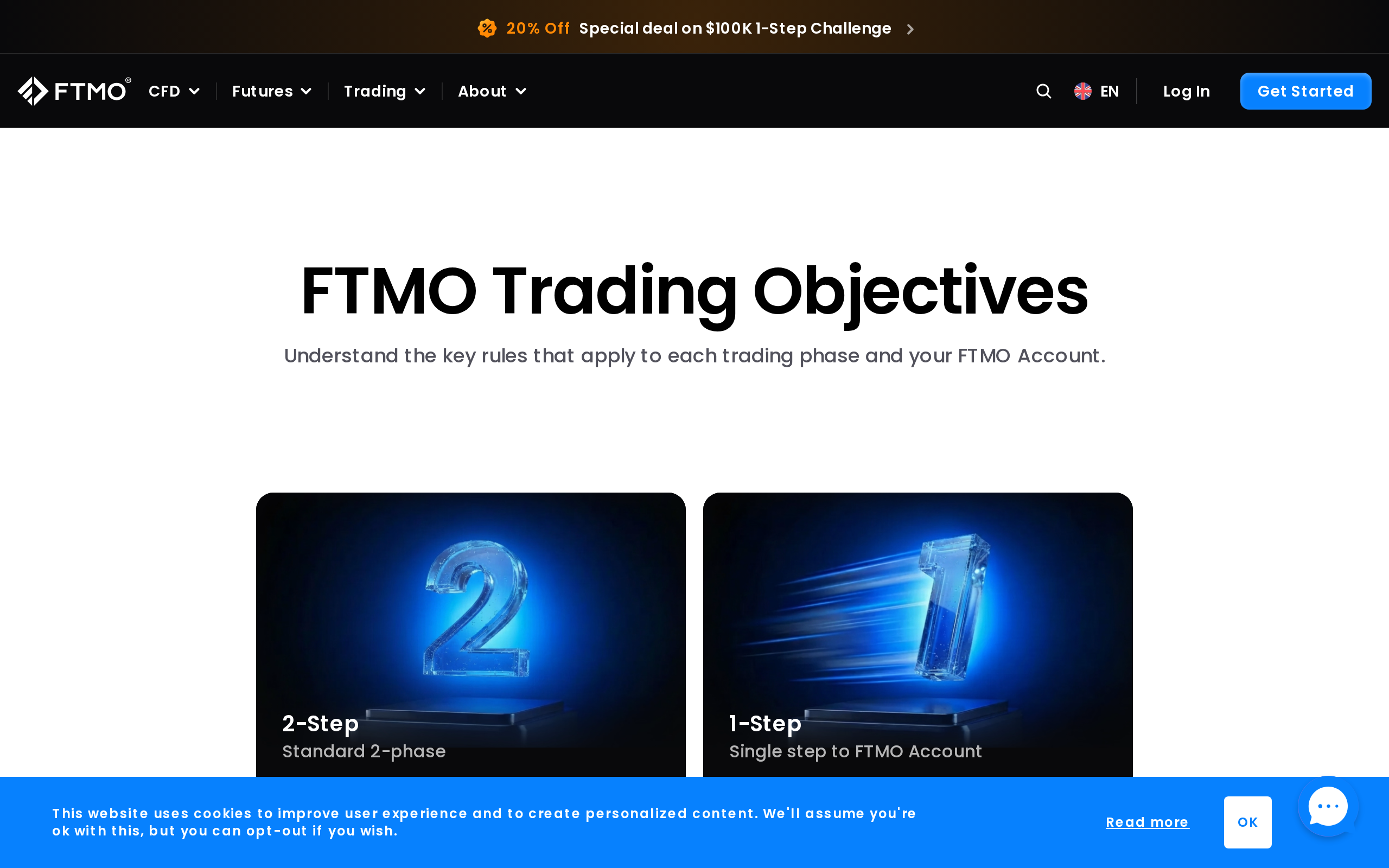
In the 2-Step, you must reach a 10% profit target in the Challenge and 5% in Verification. The maximum daily loss is 5% of initial capital, recalculated at midnight Central European time, and the maximum loss is a static 10%. You must trade on at least four days. The 1-Step is stricter: a 10% target, a 3% daily limit, a trailing 10% maximum loss that only moves up, and a best day rule that caps your best day at 50% of your total positive days' profit.
Do the sums on $10,000. A 5% daily limit is $500. Two normal losing trades with careless sizing will end it. A 1-Step account has a $300 daily limit, so a single oversized position on a news candle is fatal. The firm is not tricking anyone, since these limits are printed, but they punish the traders who most need a chance: those who size by feel.
Is the premium worth it? The comparison
Third-party comparisons put cheaper rivals well below FTMO on entry price. One roundup lists The5ers with plans from $19 and FundedNext from about $25, with profit splits up to 100% and 95% respectively. FTMO starts at 80%, with a refund of the challenge fee on the first profit split. FundedNext, by contrast, offers a bonus on the first withdrawal instead of a straight refund.
Payouts are where FTMO claims its edge. A review we read reports on-demand payouts after 14 calendar days from the first trade and processing in about eight hours on average, with later requests in one to two business days. We could not confirm those times ourselves, so treat them as a reported figure.