Coinbase review: what the easy app costs next to Advanced Trade
Buying Bitcoin and Ethereum in the simple Coinbase app costs several times what the same order costs on Advanced Trade. We lay out the fee arithmetic and who should still use the easy route.
6.4/10
Coinbase is the easiest place to buy a first Bitcoin and among the most trusted names in the industry, but the simple buy screen is expensive: published estimates put its all-in cost near 1.5% to 2% on a bank-funded order, several times the Advanced Trade rate. Use Advanced for anything beyond a first purchase, and skip the app entirely if cost is your main test.
Best for
Beginners who want a regulated name, then Advanced Trade for cost
Listed US company with a long record and a clean, simple buying flow
Advanced Trade offers maker and taker pricing under 1% at entry level
Coinbase One bundles zero-fee trades and boosted staking for a flat monthly price
Learn section explains basics in plain language for first-timers
What does not
Simple buy adds a spread plus a fee, so small orders cost the most
Card purchases carry higher percentage fees than bank transfers
Third-party fee figures disagree, and the tier tables have been reworked
Cryptoassets are volatile and can lose most of their value
Specs
Simple buy flat fees
$0.99 under $10, up to $2.99 for $50 to $200 (third-party listing)
Simple buy percentage
About 1.49% bank, 2.99% debit card, 3.99% credit card, plus spread
Advanced Trade entry tier
0.40% maker, 0.60% taker under $10,000 monthly volume (third-party listing)
Coinbase One
From $4.99 per month in the US, €4.99 on the European page
Join fee
Free to open an account
Derivatives
Stock, gold and silver perpetuals with up to 25x leverage on Advanced
Education
Free Coinbase Learn library
Most people meet Coinbase through its easy screen: pick Bitcoin, type an amount, press buy. That convenience has a price, and the price is the whole story of this review.
One $100 order, two screens
Coinbase blocks automated requests to its own help pages from our network, so the fee figures below come from third-party breakdowns, not from a page we could read ourselves. They also disagree at the edges, and Coinbase says it has reworked its tiers. Read them as a range.
On the simple screen, published guides list flat fees on small orders ($0.99 under $10, rising to $2.99 for $50 to $200) and percentage fees above that: about 1.49% from a bank, 2.99% by debit card and 3.99% by credit card. On top sits a spread that the guides put anywhere from 0.5% to 1% in calm markets, wider in a spike.
Advanced Trade drops the spread and charges maker and taker fees. The entry tier listed by those guides is 0.40% for a maker order and 0.60% for a taker order, for anyone trading under $10,000 a month.
Do the arithmetic on $100 of Bitcoin. A bank-funded simple buy lands around $2 all in. The same order taken on Advanced costs around 60 cents, and less if you place a limit order and wait to be a maker. Over a year of $100 monthly purchases, that gap is about $17 on $1,200 invested. It is not ruinous, but it is money for nothing.
coinbase.com
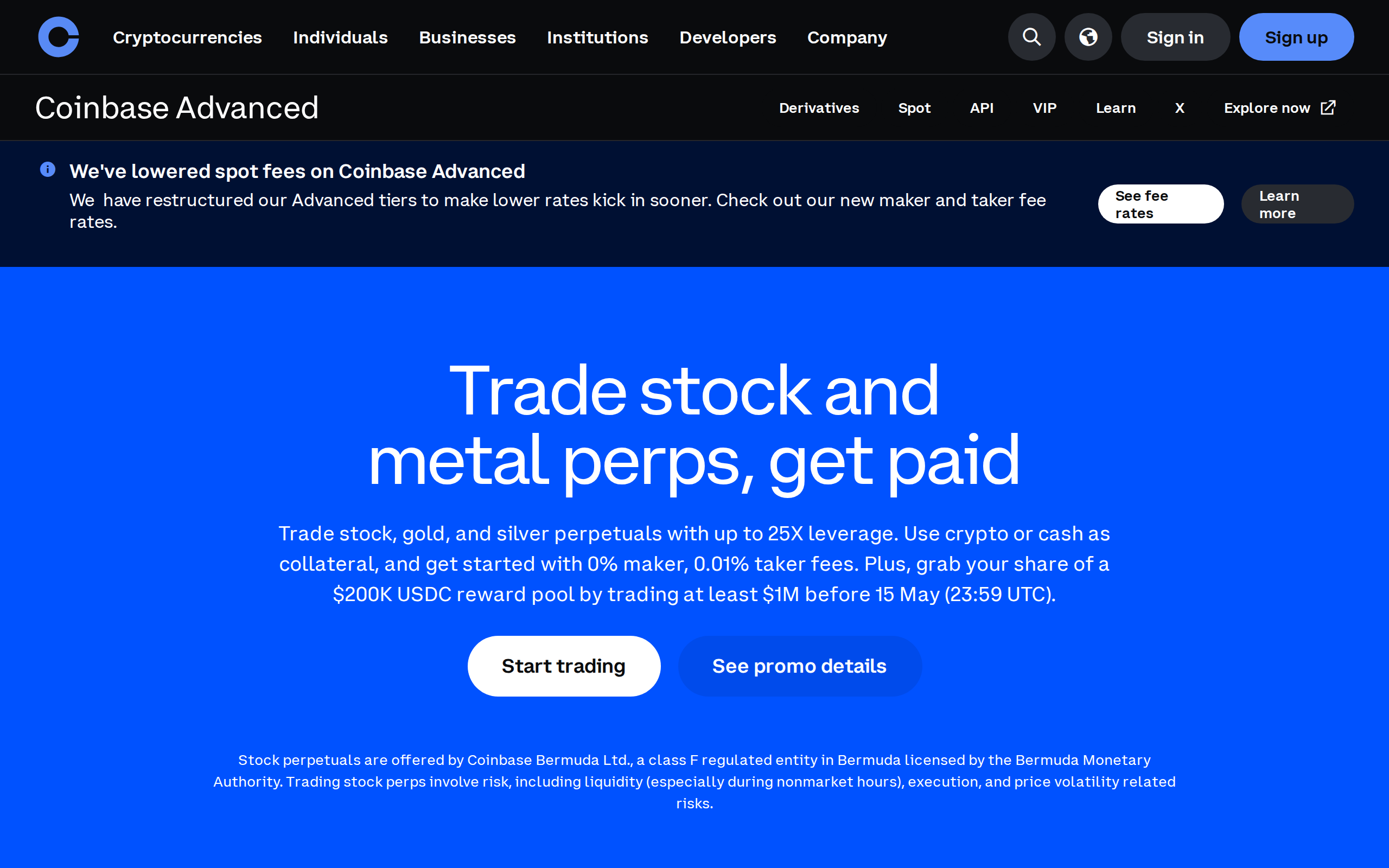
The Advanced Trade page says spot fees were lowered and tiers restructured, and advertises stock, gold and silver perpetuals with up to 25x leverage.
That page is the reason for our caution on numbers. Coinbase itself says lower rates now apply sooner, so a figure quoted last spring may already be out of date. Open the live fee table before you fund an account.
Coinbase One: who breaks even
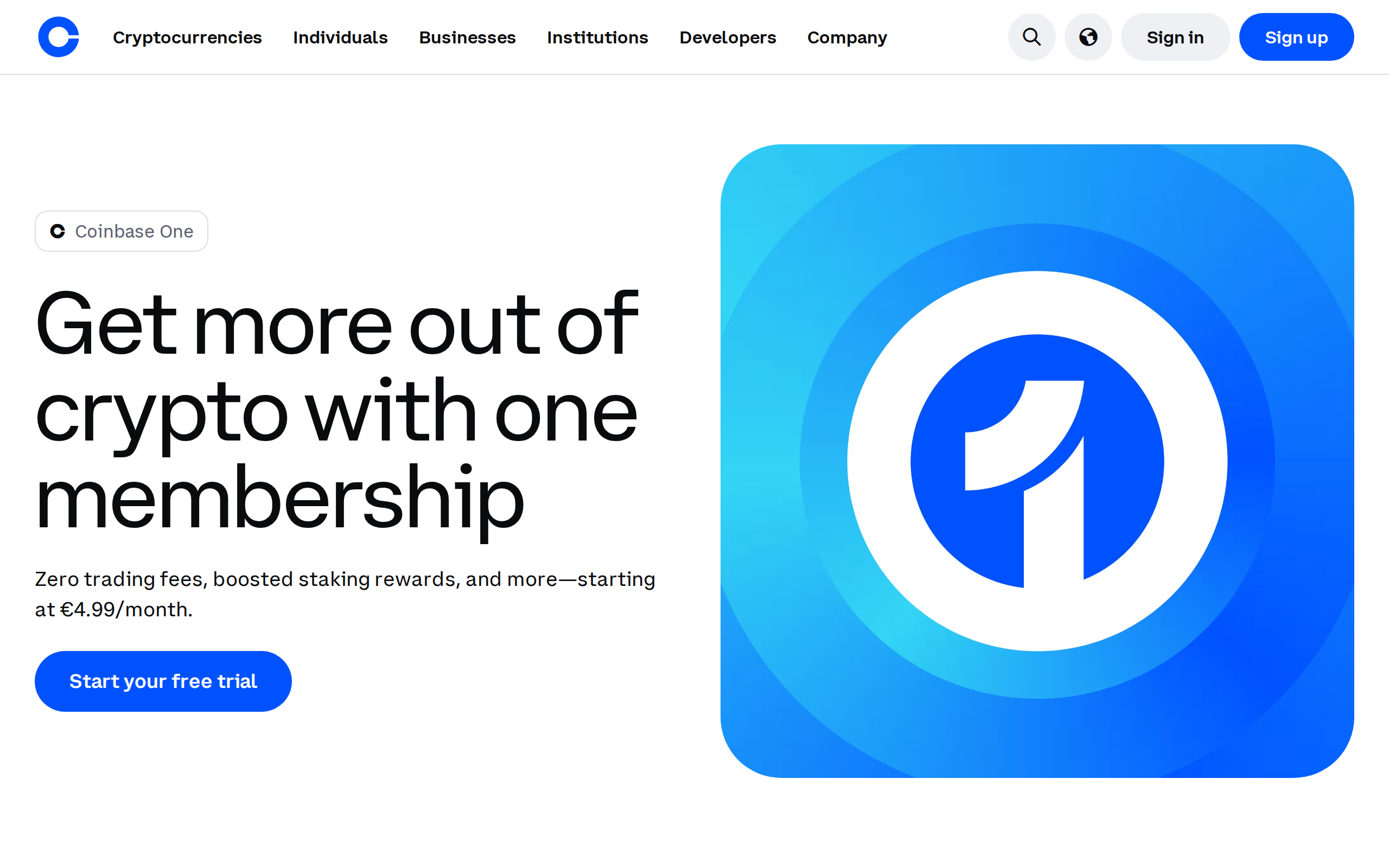
Coinbase One is a monthly membership, from $4.99 in the US and €4.99 on the European page we captured. It promises zero trading fees, boosted staking rewards and other perks.
coinbase.com
The Coinbase One page: a single membership starting at 4.99 per month, with zero trading fees among the benefits.
Work out the break-even. At 0.6% taker fees, $5 a month pays for itself once you trade roughly $830 a month on Advanced, or a little less on the simple screen where costs are higher. Someone buying $50 a week does not clear that bar. Someone rotating a few thousand dollars does. Read the small print on what "zero fees" covers, since spreads and network costs do not vanish.
The easy route has real uses
We are not telling everyone to leave the simple screen. A first purchase of $50 with a card is a fee of a few dollars, and it teaches you how buying, holding and sending work with almost no risk of a wrong click. Coinbase's Learn library is decent, and its explainers on dollar cost averaging and self-custody are clear.
coinbase.com
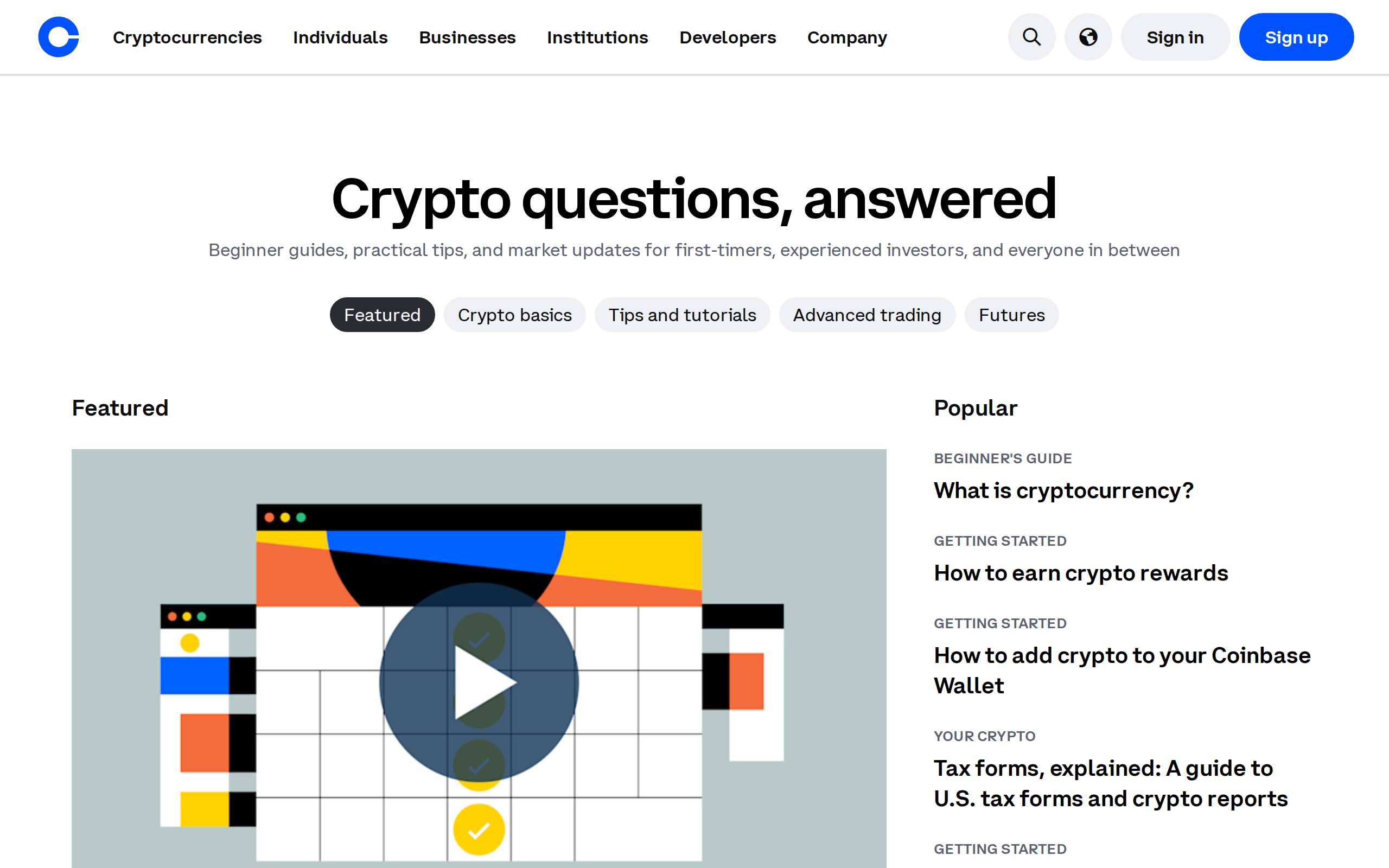
Coinbase Learn, the free library of beginner guides and market updates.
The company is also a listed US business with a public record, which matters when the alternative is an offshore exchange you cannot vet. For plenty of readers that trust is worth a slightly higher cost. It is a judgement, and reasonable people land on both sides.
Bitcoin and Ethereum versus the long tail
The comparison above holds for Ethereum as much as Bitcoin, because both are percentage-based and both trade with deep order books on Advanced. The spread on the simple screen matters most on the biggest coins in relative terms, since their true market spread is a few hundredths of a percent. What you pay Coinbase above that is margin.
Smaller tokens change the picture. Thin order books mean a taker order on Advanced can move the price against you, so the quoted 0.6% is not the whole cost. On those coins a limit order is the safer habit.
There are also costs after the buy. Sending coins to a wallet costs a network fee that Coinbase passes on, and selling triggers the same percentage fee as buying. Staking rewards on Ethereum are shared with Coinbase, which keeps a commission, so the advertised yield is not what reaches you.
What we would do, and who should skip it
For a beginner: make the first purchase in the app, then move to Advanced Trade within a month. It looks busier, yet a limit order takes two fields. For a regular buyer: use Advanced from day one and set up recurring orders there. For a heavy trader: compare Coinbase's tier table with rival exchanges, because the top tiers are where others compete hardest.
Skip Coinbase if you want the lowest fees on altcoins, or a wide token list. Skip crypto if you cannot stomach a large drop. Prices here can fall by half in weeks. Nothing in this review is advice on what to buy, and you should only risk money you can afford to lose.