Capital.com Review: Spread-Only Pricing for Gold and Index CFDs
Capital.com charges no commission, takes a $20 card deposit and links to TradingView. We check what that pricing really costs a gold and index CFD trader, including overnight funding and the 0.7% conversion fee.
7.4/10
Fair value for a casual gold or index CFD trader who likes simple, commission-free pricing and a TradingView link for charts. Gold spreads are close to the market average rather than better than it. There are no raw spread accounts, and no MetaTrader 5. Active scalpers will pay more here than at a raw broker, so they should look elsewhere.
Best for
Casual gold and index CFD traders who prefer spread-only pricing and TradingView charts
About 0.011% a day plus a benchmark rate, before any rebate
Platforms
Own app and web, TradingView link, MetaTrader 4
Regulators
FCA, CySEC, ASIC, SCB Bahamas, SCA UAE, CMA Kenya
Retail loss rate
79.75% of retail accounts lose money on CFDs (firm disclosure)
Capital.com sells one idea: you pay the spread and nothing else. No commission, no deposit fee, no withdrawal fee. For a trader who opens a few gold or Nasdaq CFD positions a week, that is easy to understand. The work is in checking whether it is also cheap.
Leveraged CFDs carry a real risk of loss, and this review is not personal advice. Capital.com's own fees page states that 79.75% of retail investor accounts lose money trading CFDs with it.
What spread-only pricing means in practice
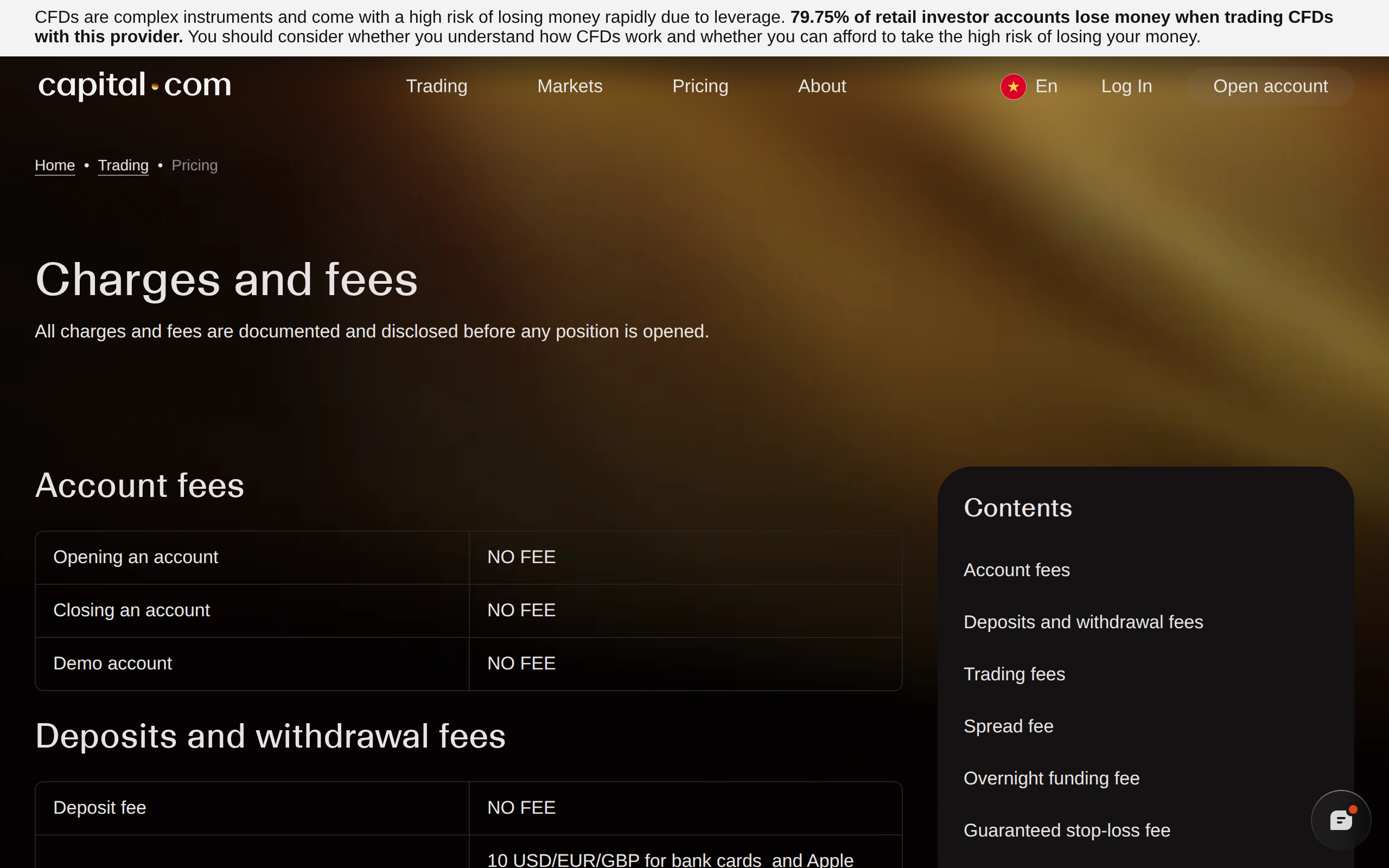
On the charges page, commission reads "no fee". Opening and closing an account costs nothing, and neither does a demo. Deposits are free from $10 by card or Apple Pay, and card withdrawals start at $20. Bank wires need at least 50 euros or the equivalent.
capital.com
The Charges and fees page, which shows the $10 minimum for bank cards and Apple Pay
Reviewers often quote $20 as the card minimum. The fees page shows 10 USD, EUR or GBP, and it adds that minimums vary by payment method, so expect to see either figure depending on your country.
The costs that remain are the ones a spread-only price hides in plain sight:
Overnight funding: about 0.011% a day in USD, plus a benchmark rate such as SOFR. On 0.6 contracts of US Tech 100 at $20,140, the page shows a long position paying $3.03 a day.
Currency conversion: 0.7% of the spot rate when you trade in a currency other than your account's.
Guaranteed stop-loss orders: a variable fee displayed before you open the position.
Hold a leveraged index position for a month and the funding line can outweigh the spread you saved. Day traders avoid it. Swing traders should not.
Is the gold spread good?
Gold is the test, because it is what most buyers of this product trade. BrokerChooser measured the XAU/USD spread at about 0.30, against a market average of about 0.32. That is a fraction better than average, which is fine, and not the edge the marketing suggests. A raw spread account at a rival broker, plus commission, can undercut it for a heavy trader (see our Pepperstone review for that route).
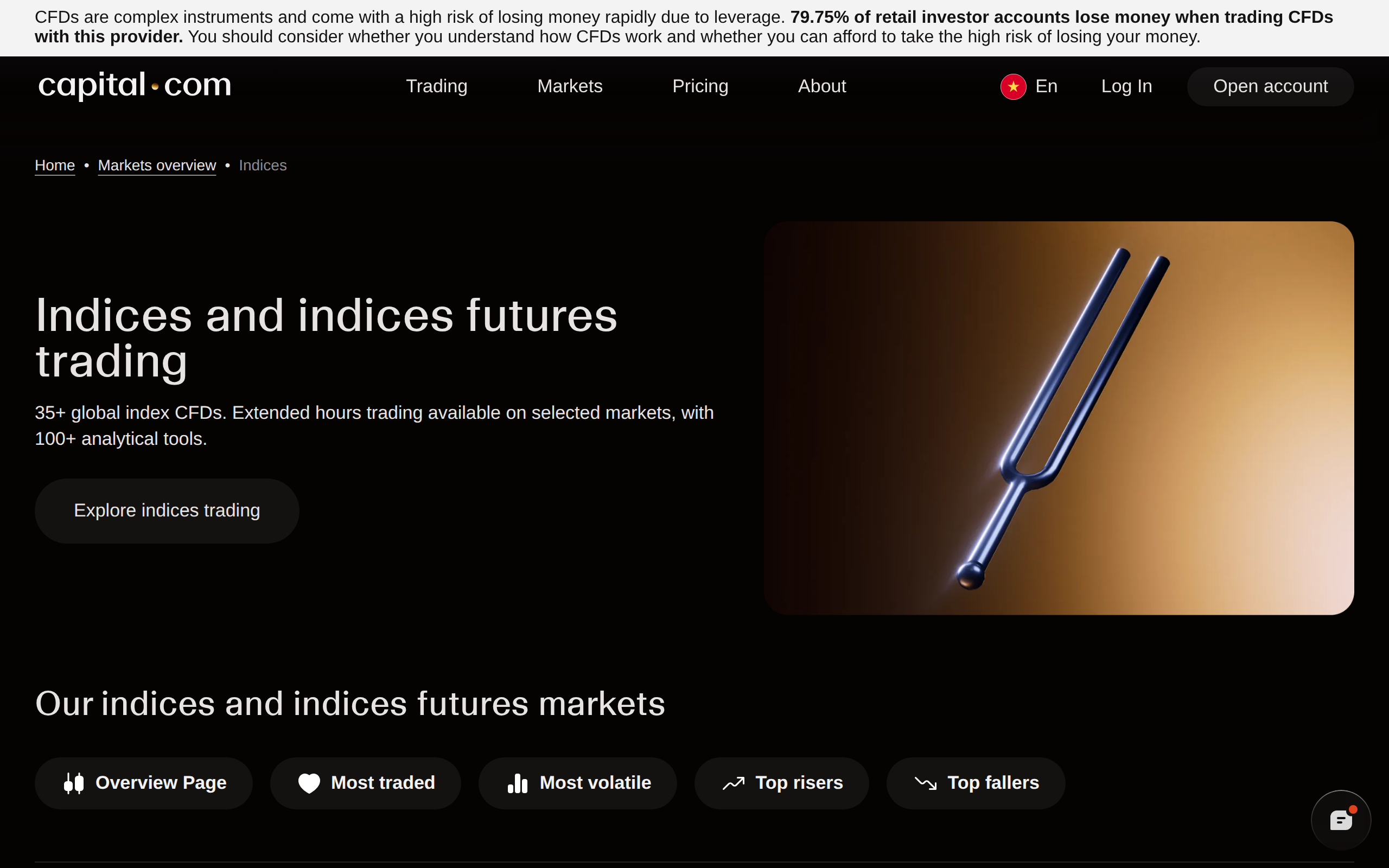
For indices, Capital.com lists 35+ global index CFDs, with extended hours on selected markets.
capital.com
The indices page: 35+ global index CFDs, with extended hours trading on selected markets
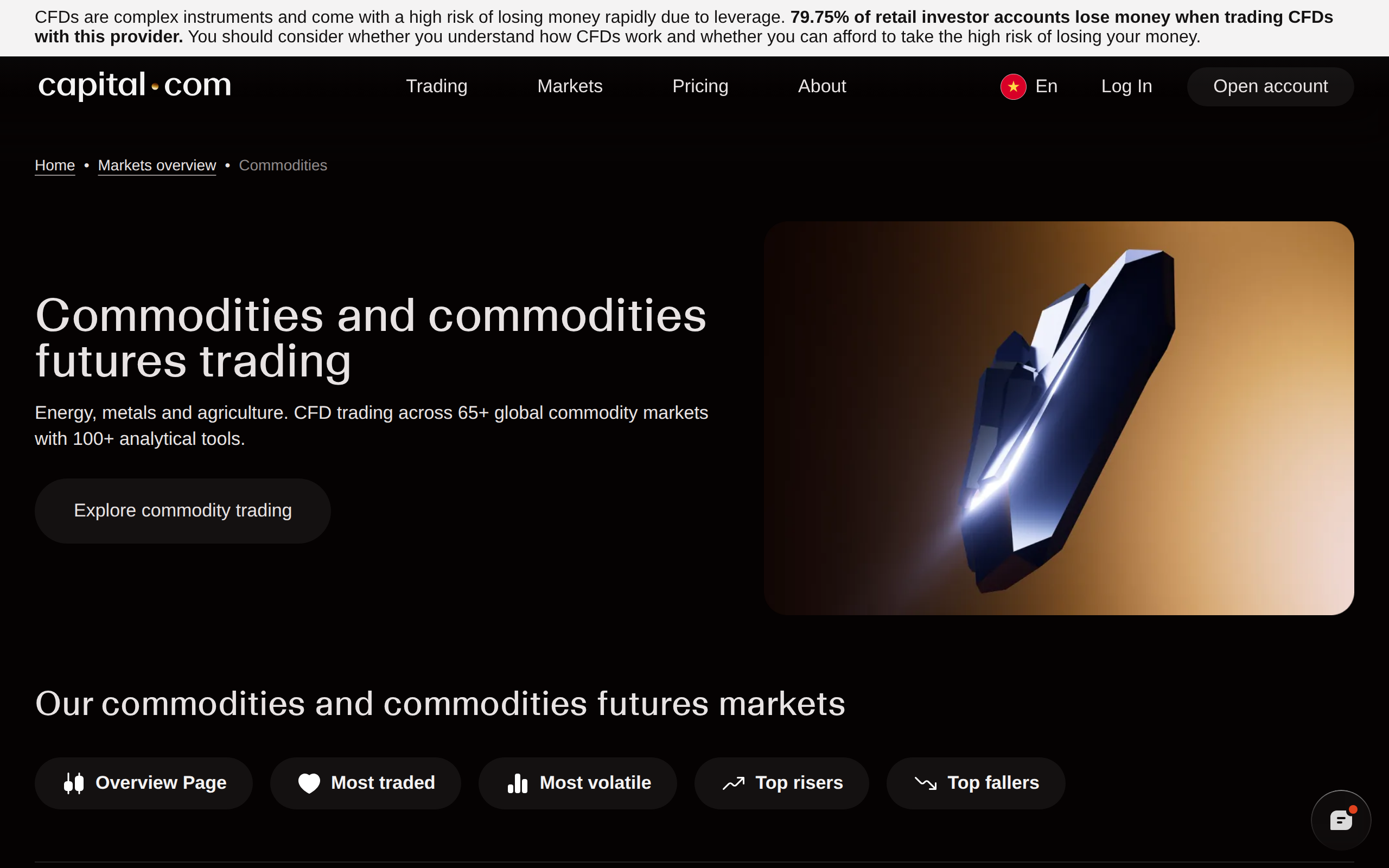
Commodities are wider, with 65+ markets across energy, metals and agriculture.
capital.com
The commodities page: CFDs on energy, metals and agriculture markets
The TradingView link and the rest of the tools
The second selling point in the question is the TradingView connection. It lets you link a Capital.com account to TradingView's charts, route orders to the same account, and keep the same pricing as the broker's own web platform. If you already pay for charting, read our TradingView review first. The free tier lets you learn the tool before you connect anything.
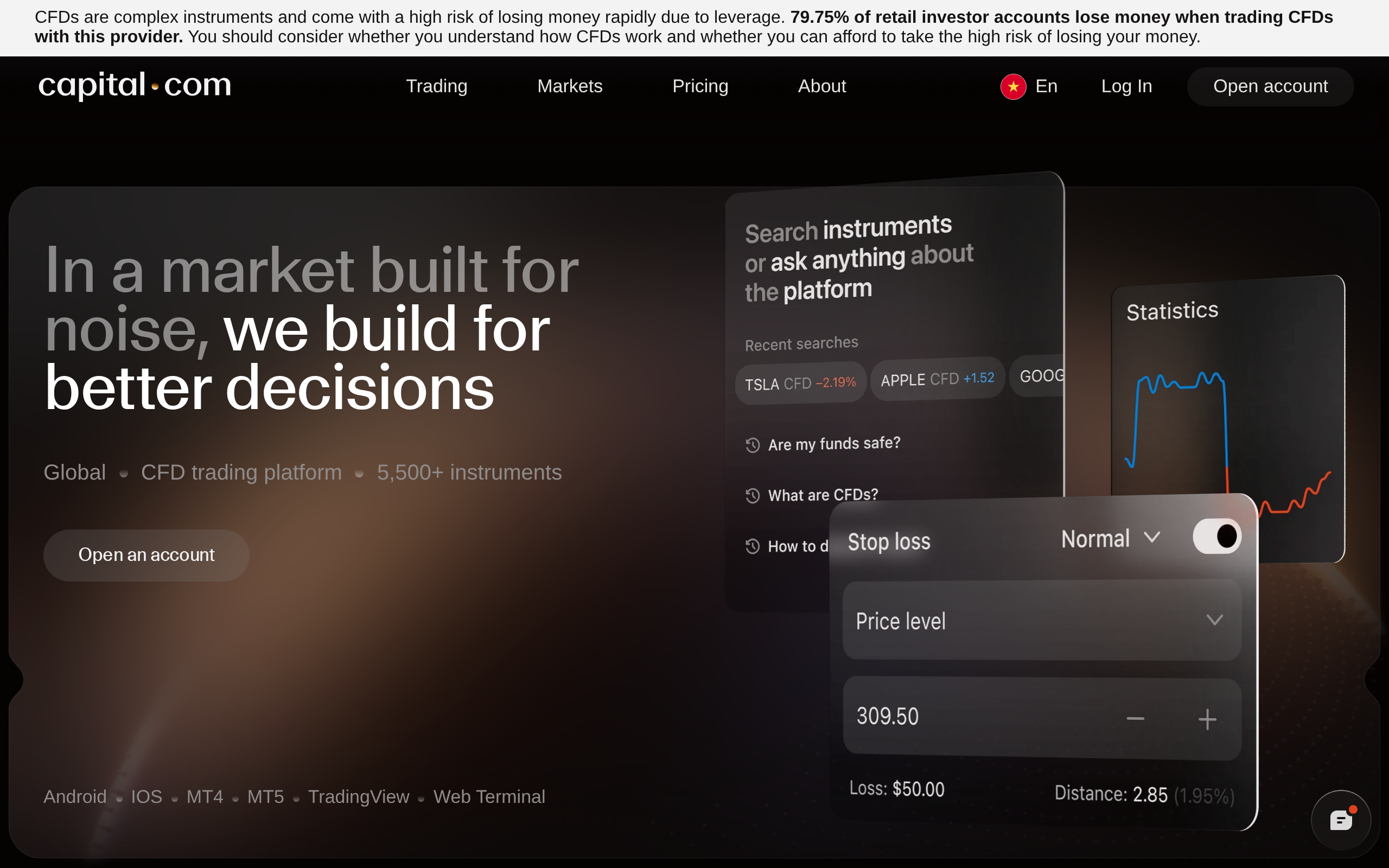
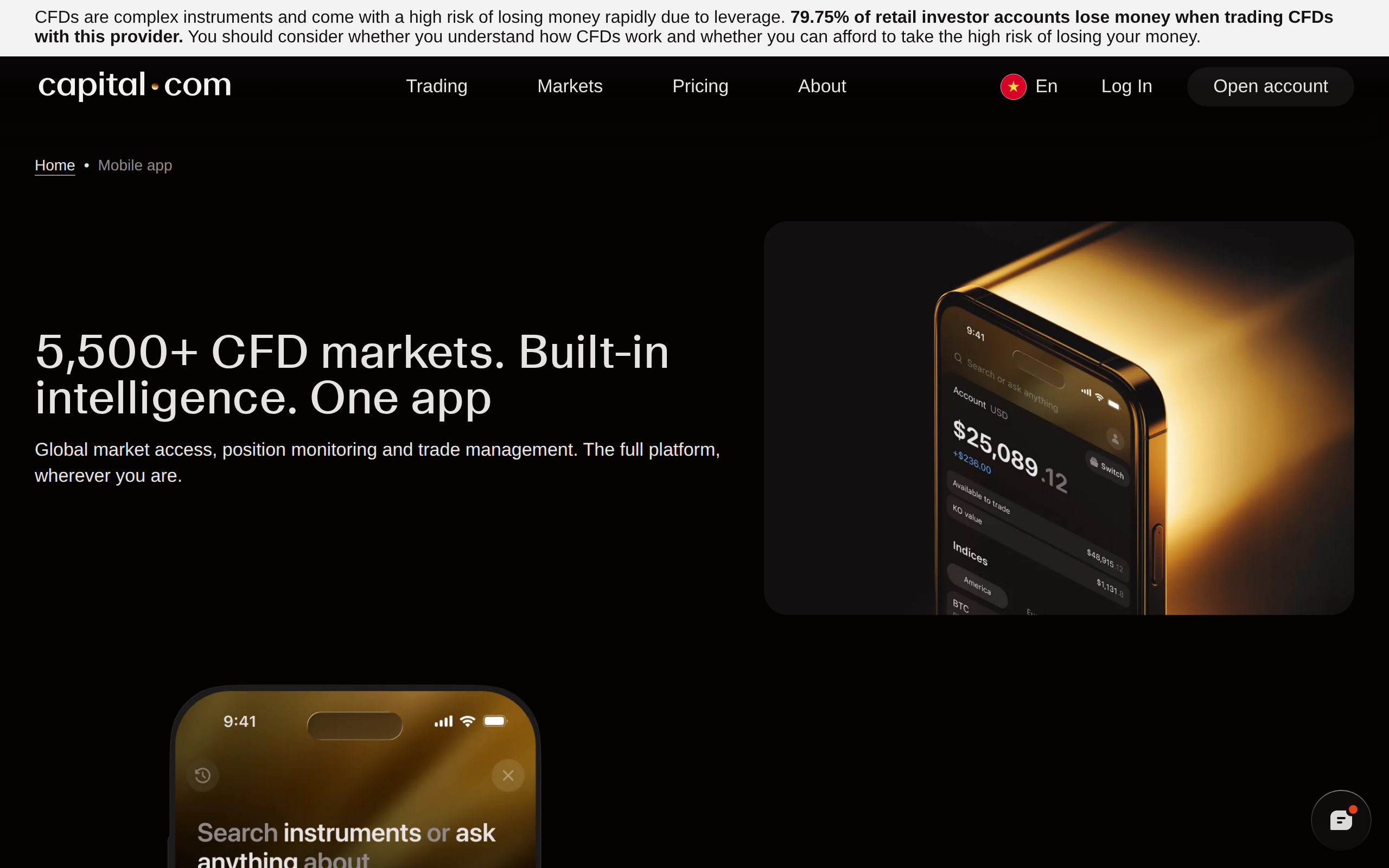
The proprietary app is the main platform, and the company's platform page advertises 5,500+ CFD markets in one app.
capital.com
The trading platforms page: one app covering the broker's whole CFD range
MetaTrader 4 is supported. MetaTrader 5 is not, according to DayTrading.com, which also notes there are no Trading Central or Autochartist research tools and no raw or tiered pricing account. That last point is the real limit: cost cannot fall as your volume rises.
Regulation depends on where you live
The broker operates through several licensed entities: the FCA in the UK, CySEC in Cyprus, ASIC in Australia, the Bahamas regulator, the UAE's SCA and Kenya's CMA. When we loaded the homepage from here, it showed the Bahamas regulator notice. That is a reminder that your protections, including negative balance protection and compensation rights, depend on the entity that takes your account. Check which one you are signed up with.
Withdrawals, and the catch in the crowd of markets
Independent reviewers report that withdrawals are processed within 24 hours in almost all cases, with a five-day ceiling. Bank transfers have the $50 floor noted above, so small cash-outs are better sent to a card.
The headline count of 5,500+ markets deserves a second look. Most of it is stock CFDs, including obscure names and altcoins that few people will ever trade. A gold and index trader uses perhaps a dozen of those markets, so the count says little about quality. The forex range of 120+ pairs, the 35+ indices and the 65+ commodities are the parts that matter here, and they are all you need to judge.
Who should use it
Choose Capital.com if you trade gold and indices occasionally, want a clean app and TradingView charts, and prefer one visible cost to a commission schedule. Skip it if you scalp, run Expert Advisors on MetaTrader 5, or hold leveraged positions for weeks, because funding will eat the simplicity.
We score it 7.4: good value for light use, and average for anyone who trades heavily.