NAGA review: is the social feed and copy trading a learning tool or a distraction?
NAGA wraps forex and CFD trading in a social feed and Autocopy leaderboard, claiming 1.5 million users. We read the fee pages and leaderboard to see whether copying strangers teaches a new trader anything.
5.9/10
NAGA is a regulated broker with a large social layer, and the layer is its weakness as much as its draw. The leaderboard ranks lead traders by profit and win ratio, not by drawdown, which is how a fragile strategy can look like a star. Costs are layered: variable spreads, copy fees, a reported $20 inactivity charge and slow verification. It works as a place to watch other traders, less so as somewhere to learn.
Best for
Curious beginners who want to watch other traders on a small, capped budget
Regulated in the EU by CySEC and passported across the EEA
Autocopy lets you follow a lead trader in a couple of taps
More than 4,000 tradable assets across forex, indices, shares, crypto and futures
Proprietary web and mobile apps plus MT5 for chart-focused traders
Demo account to try the feed without funding
What does not
The leaderboard shows profit and win ratio, and it does not headline drawdown
Copy fees are layered, and sources disagree on how much they take from profit
A $20 inactivity fee after about three months is reported by reviewers
Slow account verification delays first withdrawals in many user complaints
87.36% of retail accounts lose money in the risk warning quoted by one review
Specs
Regulator
CySEC (NAGA Markets Europe), passported across the EEA
Minimum deposit
$100 per one review; check your region
Forex spreads
Variable; AUD/CAD averages 1.4 pips on the fee page
Real stocks
3 EUR per closing; ETFs 0.10% of notional
Crypto
0.49% to 3.49% depending on plan
Copy trading
Performance fees reported from 7.5% to 20% by VIP tier
Inactivity fee
$20 after about three months, per reviewers
Platforms
NAGA Web Trader, iOS, Android, MT5; no MT4
Community
1.5 million plus users claimed on the leaderboard page
Copying a stranger's trades feels like a shortcut. NAGA has built an entire brand on that feeling, with a social feed, a leaderboard and a button called Autocopy. Our question was narrower than "does it make money": does watching, and copying, teach a new forex trader anything?
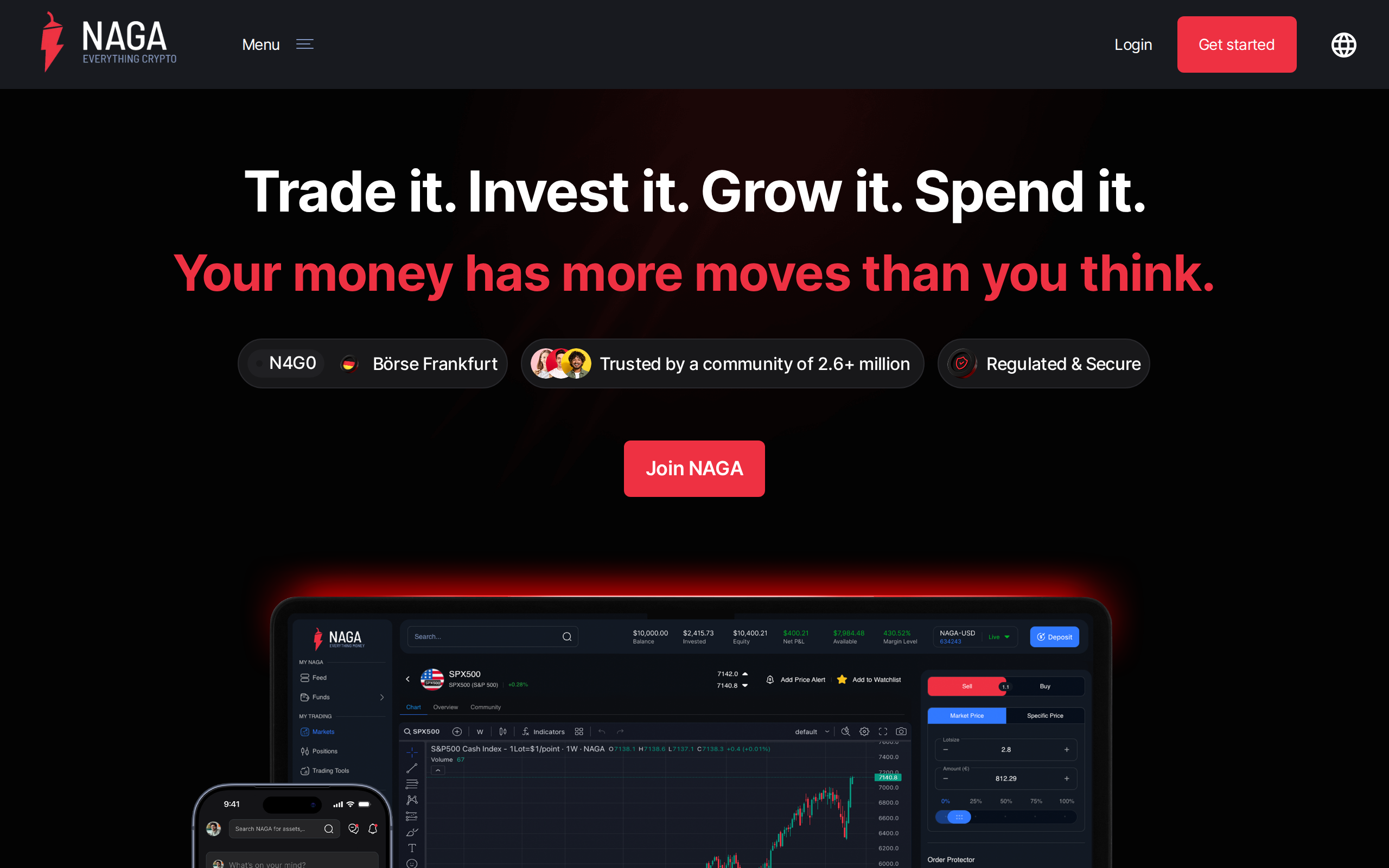
The pitch, as the home page makes it
NAGA's front page promises to let you "trade it, invest it, grow it, spend it", which tells you the company sees itself as a money app first and a broker second.
Behind that sits a real regulatory structure. Reviewers point to CySEC oversight of NAGA Markets Europe, with passporting across the EEA. In June 2026, according to one summary, its crypto arm gained authorisation under the EU's MiCA rules. That is a better starting point than many social brokers offer.
How Autocopy works in practice
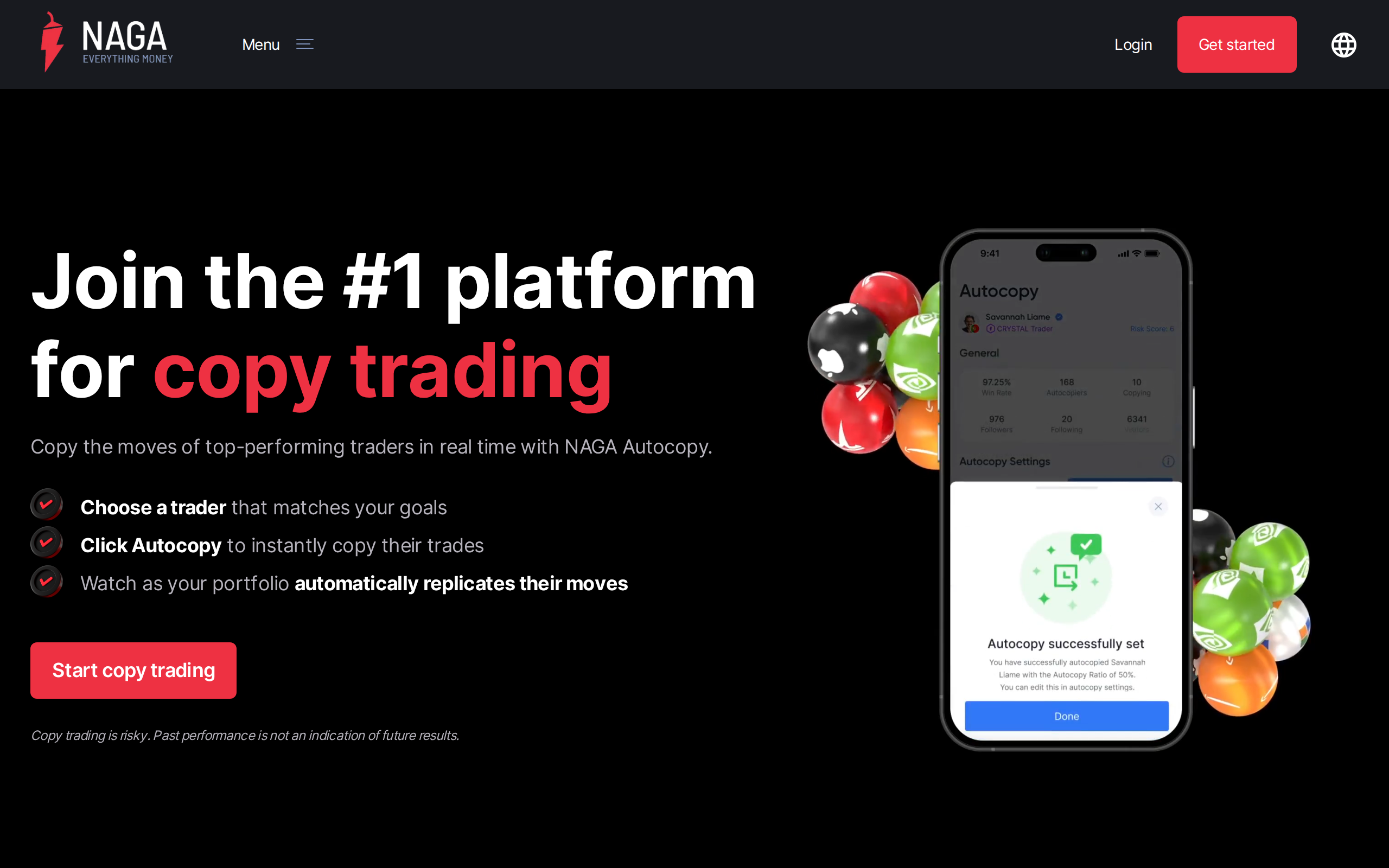
The mechanics are deliberately short. NAGA's copy page tells you to choose a trader who matches your goals, then click Autocopy to mirror their trades in real time.
naga.com
The copy trading page, with the three-step pitch: choose a trader, click Autocopy, copy their trades.
Two clicks is the whole appeal, and also the whole risk. Nothing in that flow makes you read a trade list, check how long the leader has traded or ask what they do when a position goes wrong.
The leaderboard, read the way a sceptic reads it
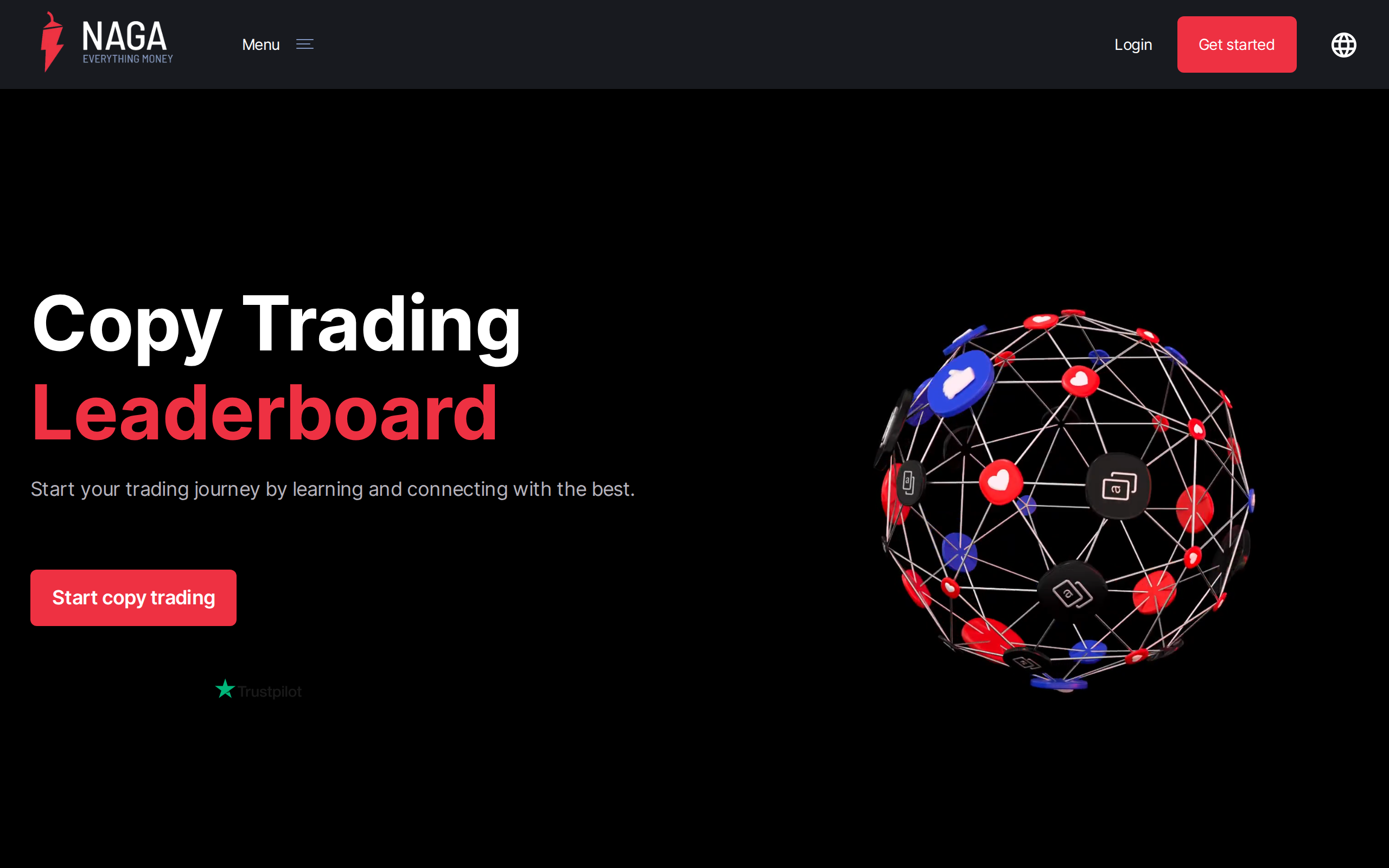
The copy trading page claims more than 1.5 million users and says lead traders averaged an 84.93% win rate in August 2026.
naga.com
The Copy Trading Leaderboard, with a headline about learning and connecting with the best traders.
We read the ranked rows underneath. Each shows a handle, followers, auto-copiers, profit and a win ratio. Some leaders show 100% wins, others 58%. What the table does not lead with is drawdown, the peak-to-trough loss you would have sat through to earn that profit. A trader who wins 97 small trades and loses one huge one has an excellent win ratio and a dangerous account.
That is the core problem for learners. A win rate rewards a style that hides risk, and beginners are the ones who cannot spot it. Compare it with Myfxbook, which puts drawdown next to gain in public.
What copying costs
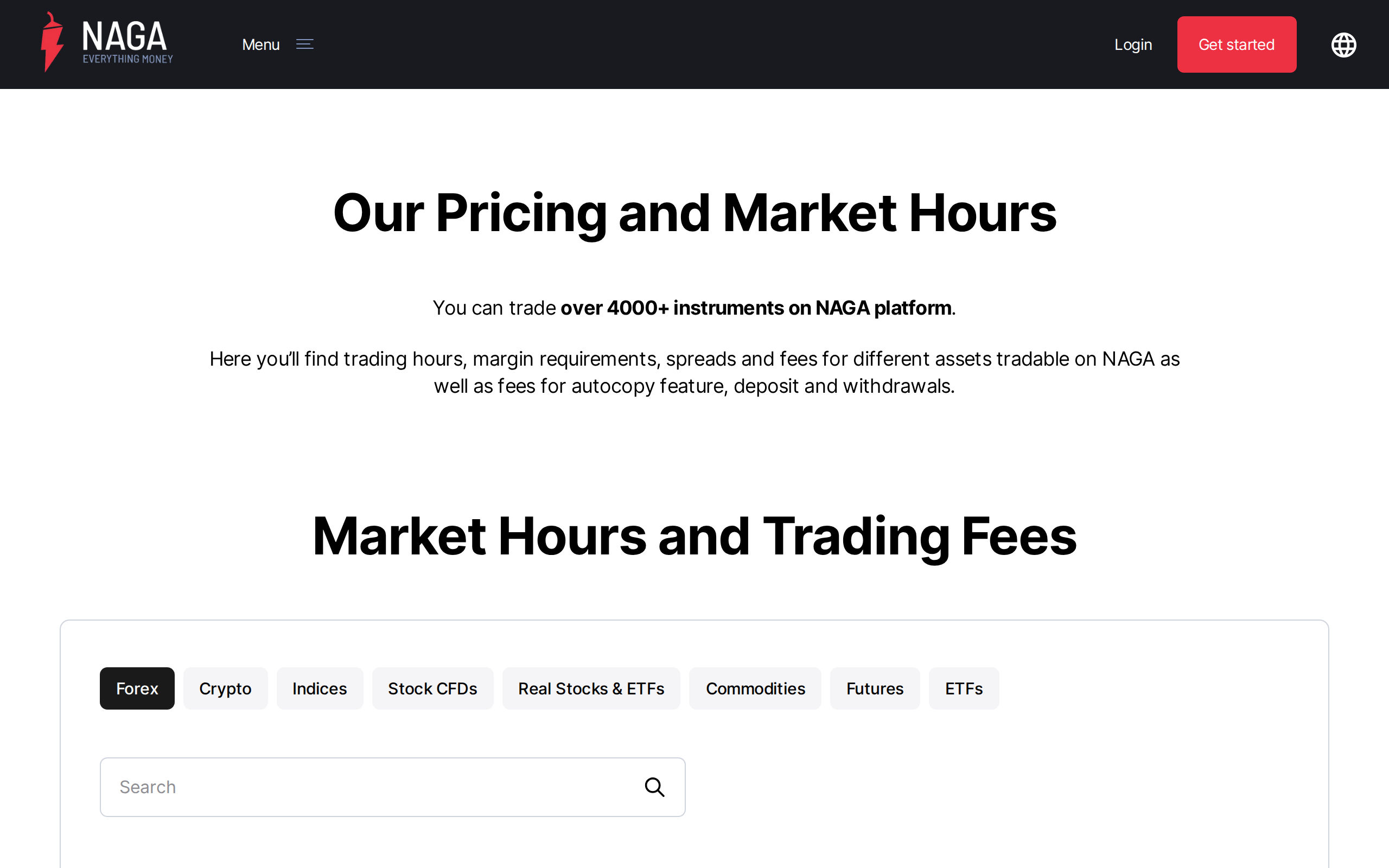
Sources disagree on the fee, and the disagreement is the finding. One review quotes a structure that starts near $0.99 plus 5% of profits over $10; another gives performance fees of 7.5% to 20% by VIP level. NAGA's own hours and fees page has a tab for copy trading, so check the current schedule on your account before you commit.
naga.com
The pricing and market hours page, with a table of swap, average spread and margin fee for each forex pair.
Elsewhere on the same page, spreads are variable and vary by pair (AUD/CAD averaged 1.4 pips in the table we saw), and reviewers list real stocks at 3 EUR per closing, ETFs at 0.10% and crypto at 0.49% to 3.49% by plan. A $20 inactivity fee after about three months is reported by reviewers, and withdrawal complaints centre on slow verification.
The market list and platforms
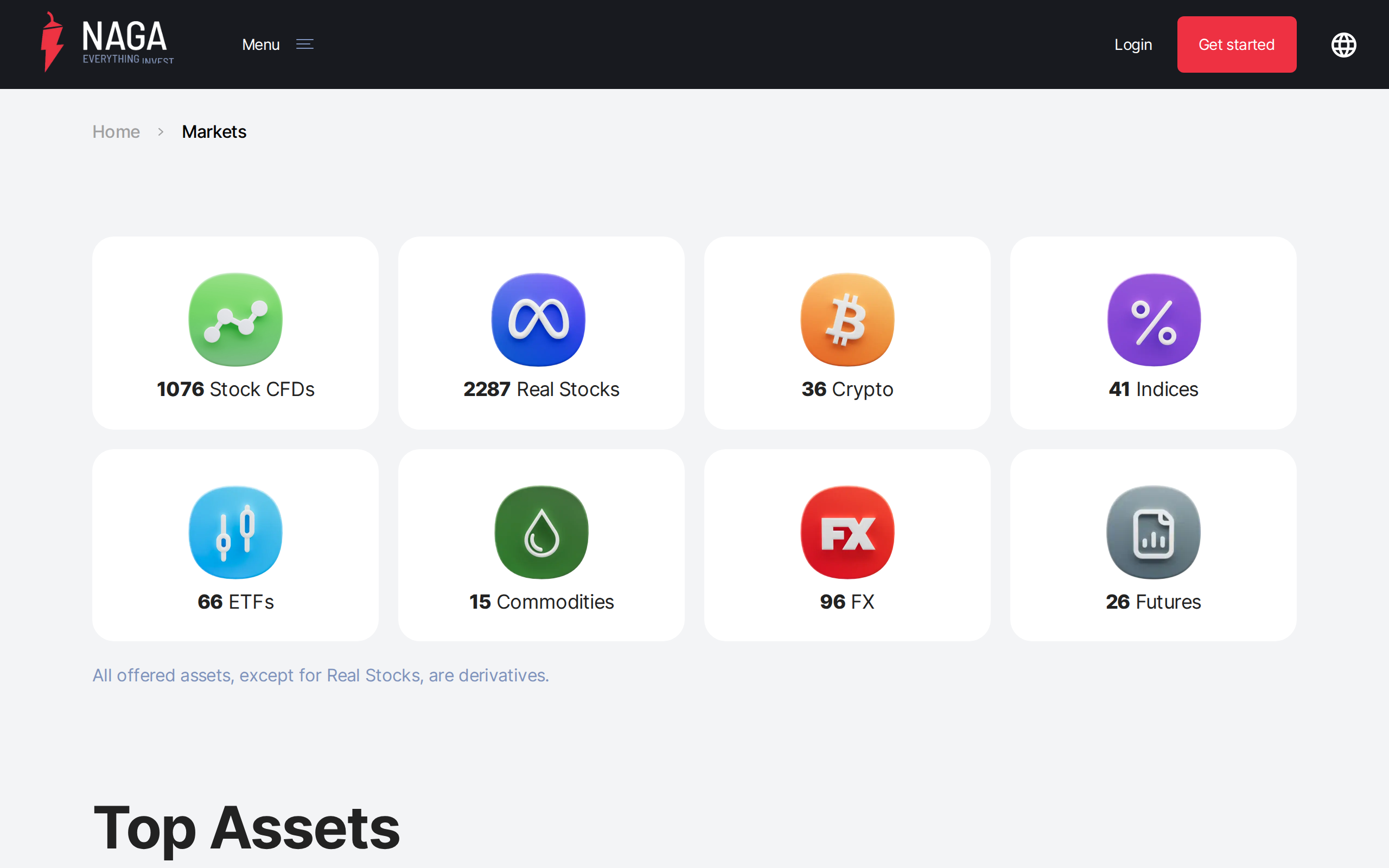
NAGA advertises more than 4,000 assets. Traders can use the proprietary apps or MT5, while MT4 is not offered.
naga.com
The markets page, headed Top Assets, listing tradable instruments by category.
For a new forex trader the breadth is a distraction: two dozen pairs are plenty to learn, and 4,000 instruments make it easy to wander into shares and crypto CFDs with different costs.
Who this suits, and who it does not
NAGA fits someone who wants one app for a small stock purchase, a crypto position and a look at how other people trade, all under a European licence. It is a poor fit for the trader who wants the tightest raw spread on EUR/USD, because pricing here is variable and spread-based, and the site itself does not publish a raw-plus-commission account. Serious cost hunters belong at a dedicated raw broker.
It is also a poor fit for anyone in the United States, where the broker does not accept clients, or for a person who expects to withdraw within a day of funding. Reviewers repeatedly say verification takes 24 to 48 hours at best, and longer when documents need a second look. Submit your identity papers on day one.
Learning tool or distraction?
Both, depending on how you use it. Reading the feed to see how other people size and exit trades is fair education, and the demo account lets you do it without money. Copying with real funds is different. You inherit a stranger's risk without their judgement, and the fees reduce your return before the market does.
Our advice for a first month: use the demo, ignore the win ratio, and look for drawdown before profit. If you copy at all, cap the amount at what you can lose completely.
Some 87.36% of retail accounts lose money on derivatives, according to a risk warning quoted by one review. Leveraged CFDs can lose more quickly than most people expect, and this review is not personal advice.