Fusion Markets review: does $2.25 a side really beat IC Markets and Pepperstone?
Fusion Markets charges $2.25 per side per lot with no minimum deposit and no withdrawal fees. We worked out the round-trip maths against IC Markets and Pepperstone and checked who regulates it.
8.4/10
Fusion Markets has the lowest published commission of the big raw-spread names, and the Zero account is honest about it: $2.25 a side on top of spreads that start at 0.0 pips. The edge is real but modest. Cautious traders should read which entity regulates them first, because the strongest licence covers Australian clients only.
Best for
Cost-focused scalpers and day traders outside Australia who already use MT4, MT5 or cTrader
Zero account commission of $2.25 a side, $4.50 a lot round trip
No minimum account size and no withdrawal fees
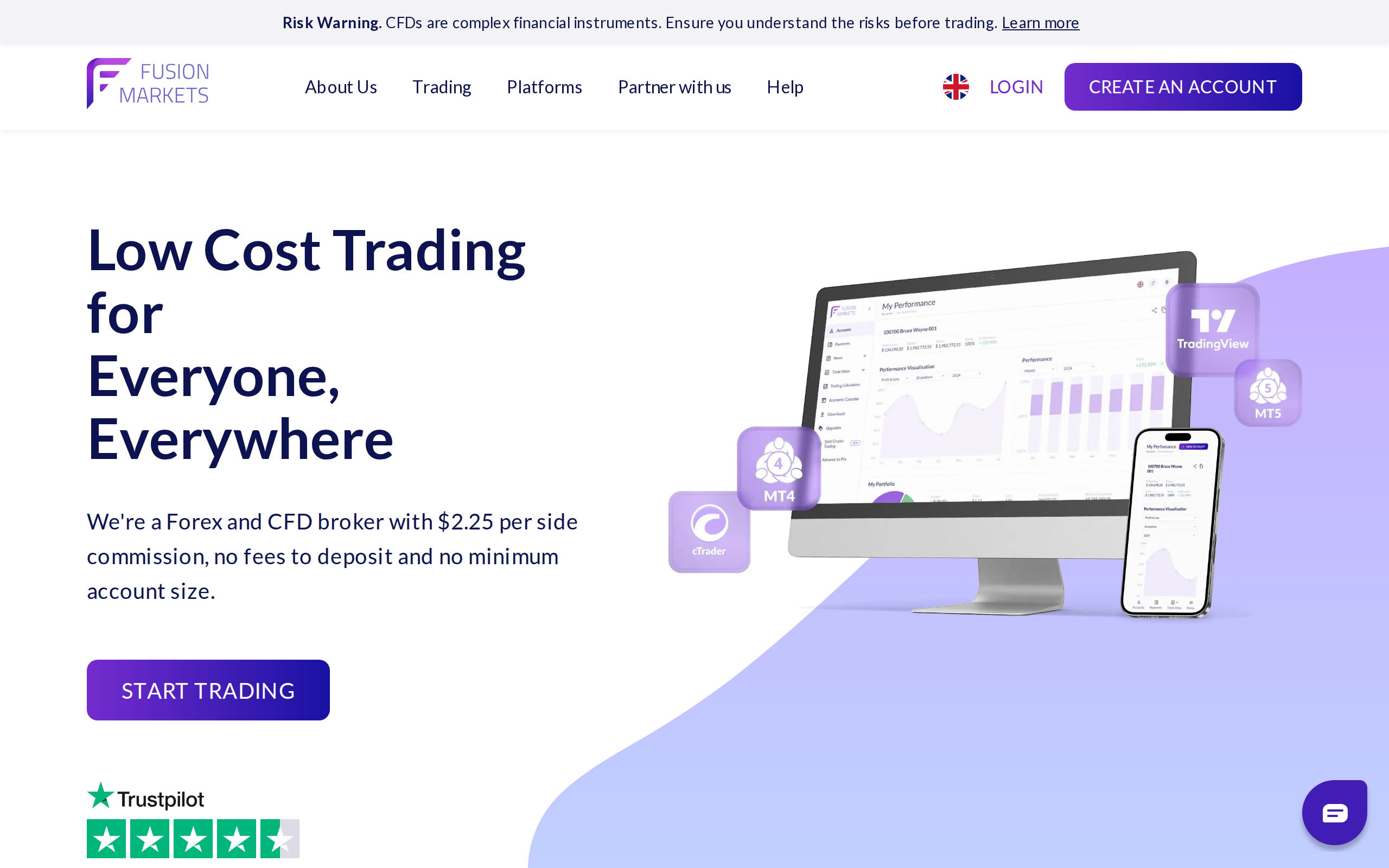
MT4, MT5, cTrader and TradingView on one broker
Client money held in segregated trust accounts with NAB
What does not
The ASIC licence covers Australian clients only, others sit offshore
Independent slippage data is thin, so fill quality needs your own test
Spread and swap comparisons vary by report and time of day
Thin educational content next to older, larger brokers
Specs
Maker
Fusion Markets
Minimum deposit
None
Zero account commission
$2.25 per side per lot
Spread from
0.0 pips (Zero)
Withdrawal fees
None
Platforms
MT4, MT5, cTrader, TradingView
Regulators
ASIC (Australia), VFSC, FSA Seychelles
Client money
Segregated trust accounts at NAB
Every raw-spread broker claims to be the cheapest, and each can prove it with a cherry-picked pair and a quiet hour. Fusion Markets makes a simpler claim: its commission is lower, full stop. We tested that claim as arithmetic first, then went looking for the costs the headline hides.
The round-trip sum
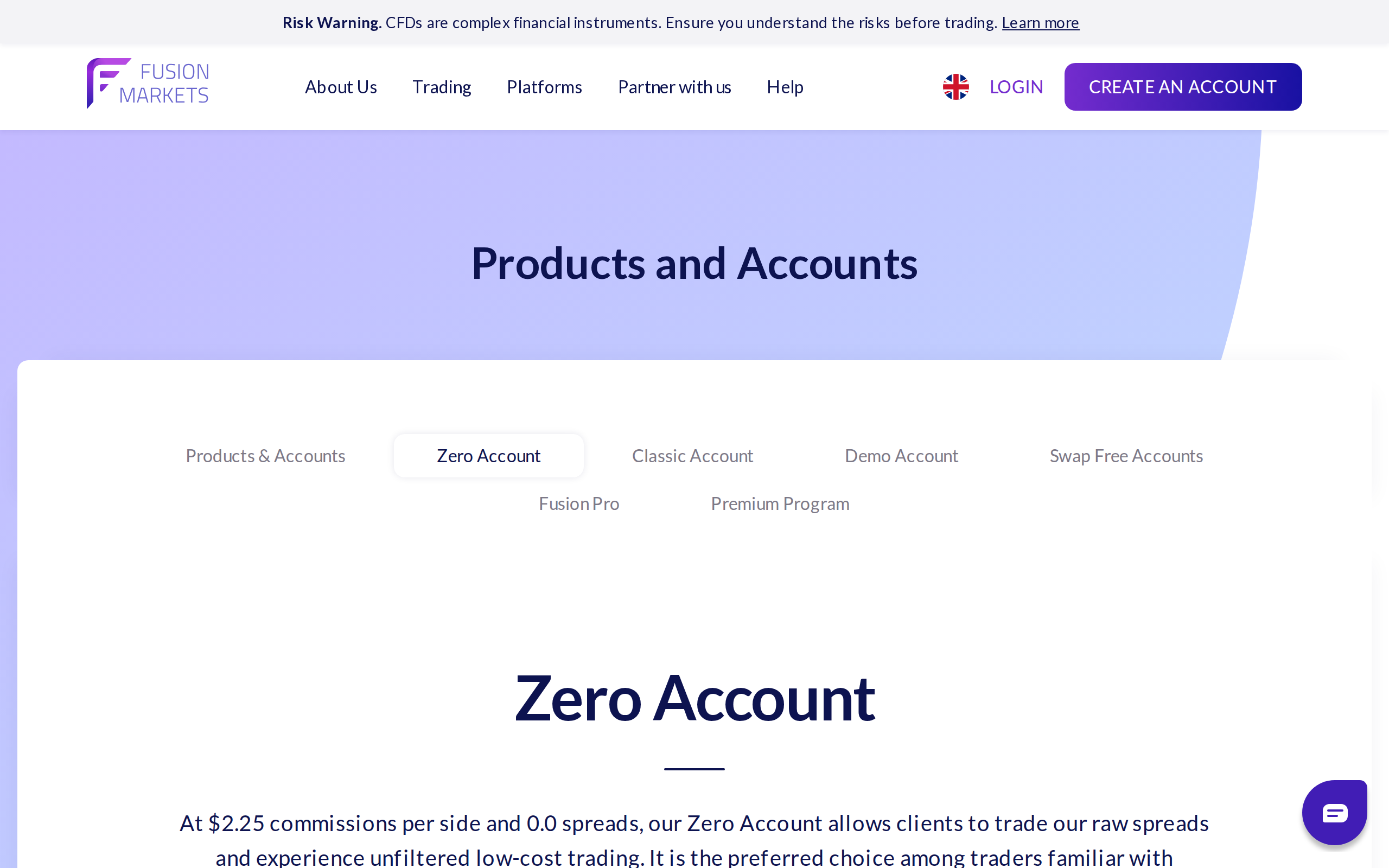
The Zero account page gives spreads from 0.0 pips and a commission of $2.25 per side per standard lot, so $4.50 for a round trip. The mini-lot figure is $0.45. Add a raw EUR/USD spread that third-party tests put near 0.03 pips (about $0.30 a lot) and the round trip comes to roughly $4.80. Fusion itself talks of about 0.5 pips all-in.
Now the rivals. IC Markets lists $3.50 a side, which is $7.00 a round trip, and one comparison puts its all-in EUR/USD cost at about 0.72 pips on MetaTrader. The same comparison puts Pepperstone's Razor account at roughly 0.80 pips after commission. Translate that to dollars and Fusion saves around $2 to $2.50 a lot each round trip.
fusionmarkets.com
The Zero account page, as captured. The commission and the 0.0 spread claim sit in its opening paragraph.
Whether that matters depends on volume. A swing trader placing five lots a month saves about $12. A scalper doing 200 lots saves around $450. That is the honest size of the edge: real, and only large for people who trade a lot.
What the comparison leaves out
Three costs sit outside the sum, and the sites that rank brokers rarely measure them.
Slippage. Independent tests place Fusion's market-order execution in the sub-100ms range, but we found no audited slippage study comparing it with IC Markets or Pepperstone. A saved dollar of commission can vanish in one bad fill. Run a demo on news, then a small live account.
Swaps. Overnight financing on Zero accounts is charged by the broker, and we found no published like-for-like table. If you hold positions for days, compare the swap sheets in the terminal, not the marketing page.
Spread widening. Averages hide the moment at the rollover hour or after a data release, when raw spreads gap out on every broker.
One more choice sits in front of you: Fusion also runs a Classic account with no commission and a wider spread. It suits anyone who dislikes seeing a separate commission line on the statement, but the raw arithmetic favours Zero for anyone trading more than a few lots a month. Open both as demos, run the same trades for a week, and let the numbers decide instead of us.
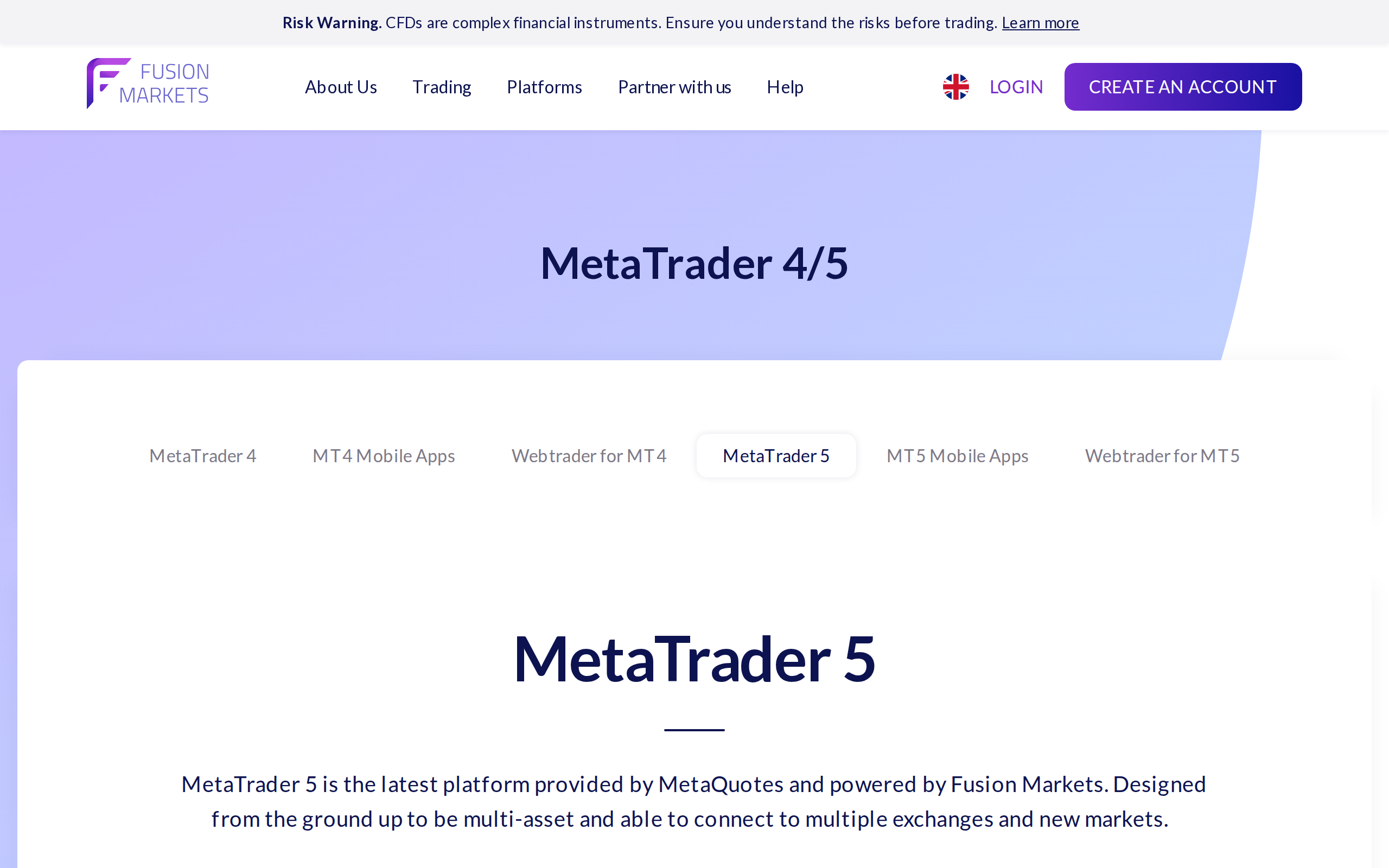
Platforms are the strongest part of the package. You get MT4 and MT5, cTrader, TradingView, a copy-trading service called Fusion+ and DupliTrade, all on the same account family.
fusionmarkets.com
The MetaTrader page. Fusion offers both versions, plus cTrader and TradingView.
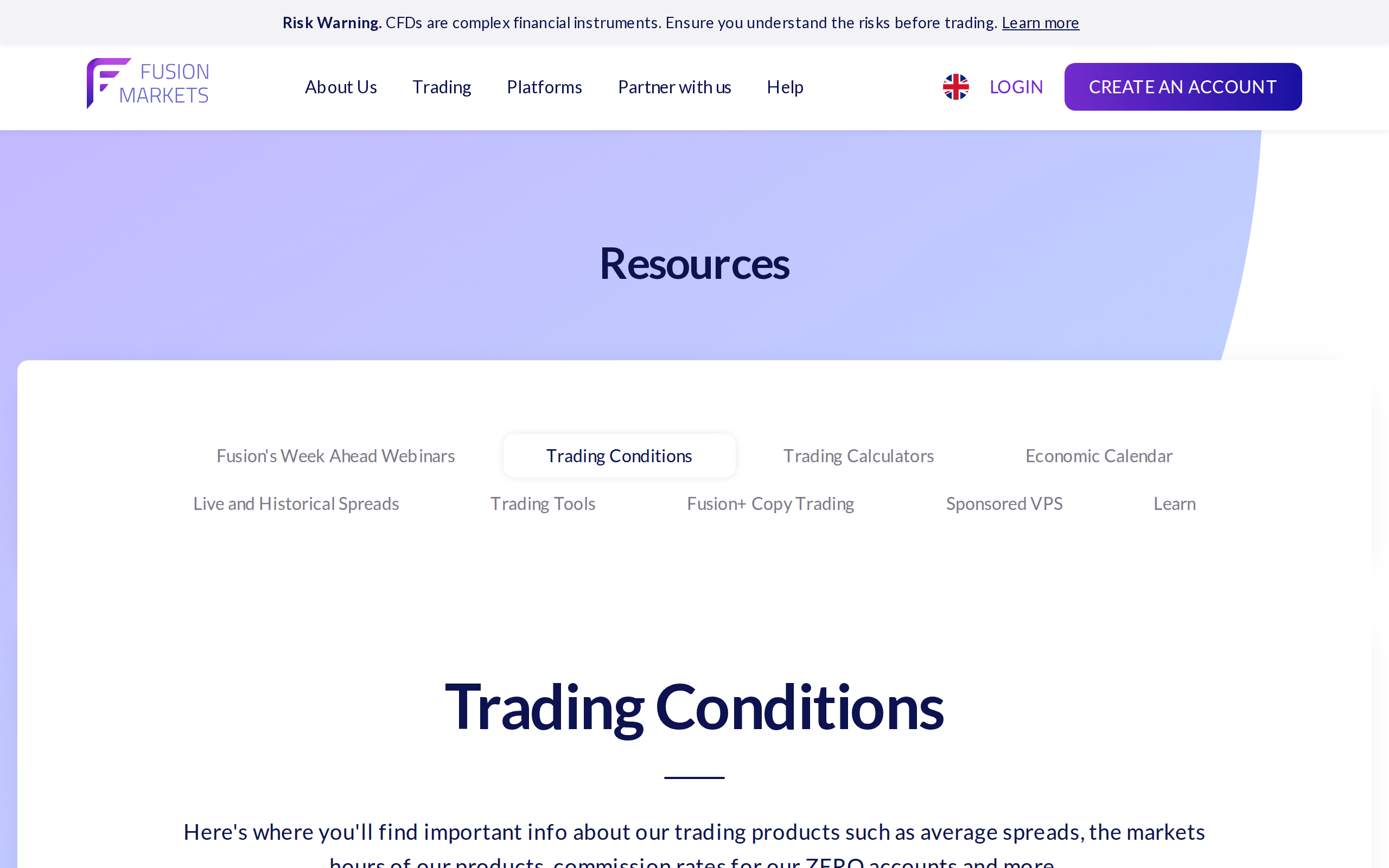
The conditions page is where average spreads, session times and margin tables live. It loads plain, with little design, and it is the page to check before you fund an account.
fusionmarkets.com
The trading conditions page, the reference for spreads, session hours and leverage.
Who regulates you
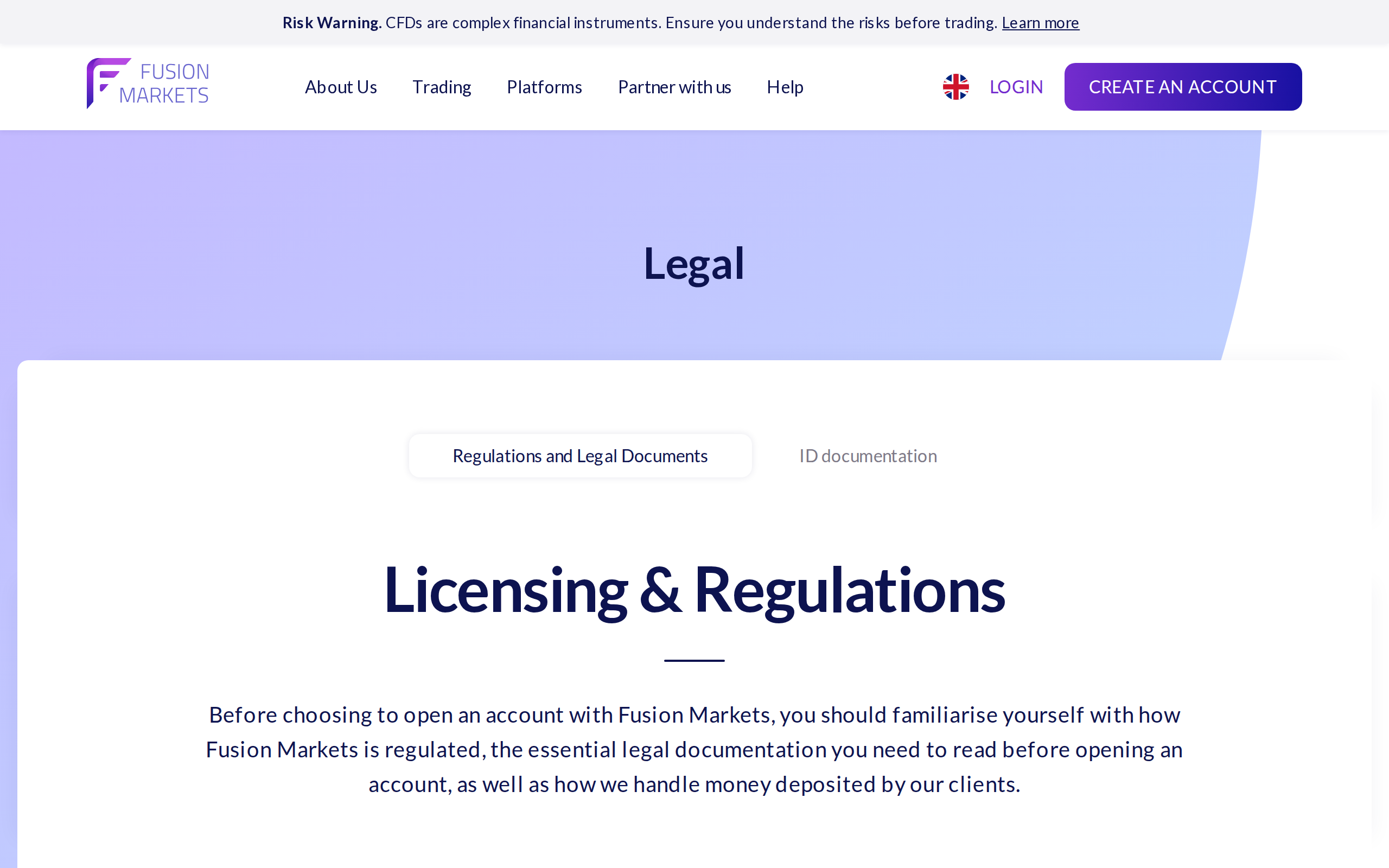
This is where we would slow down. The regulations page lists three regimes: ASIC (AFSL 385620) for Australian clients only, the Vanuatu Financial Services Commission, and the Financial Services Authority of Seychelles under licence SD096. Client money goes into segregated trust accounts at National Australia Bank.
If you are not in Australia, you will almost certainly sign with an offshore entity. That is common among raw-spread brokers and not a scandal, but it means weaker regulators than the FCA or ASIC. Read the negative balance protection document before you rely on it.
fusionmarkets.com
The licensing page, listing each regulator and entity.
Who should choose Fusion, and who should not
Choose it if you trade in volume, already know how to read a spread, and mainly need a low round trip on majors and gold. It suits scalpers and day traders outside the UK and EU.
Skip it if you want a top-tier regulator on your account, if you prefer research and education bundled in, or if you trade twice a month and would never notice $12.
CFDs are leveraged and most retail accounts lose money. This review is not personal advice.
Verdict
An 8.4 out of 10: cheapest of the raw-spread names on paper, with the caveat that we could not confirm its fills against its rivals.